
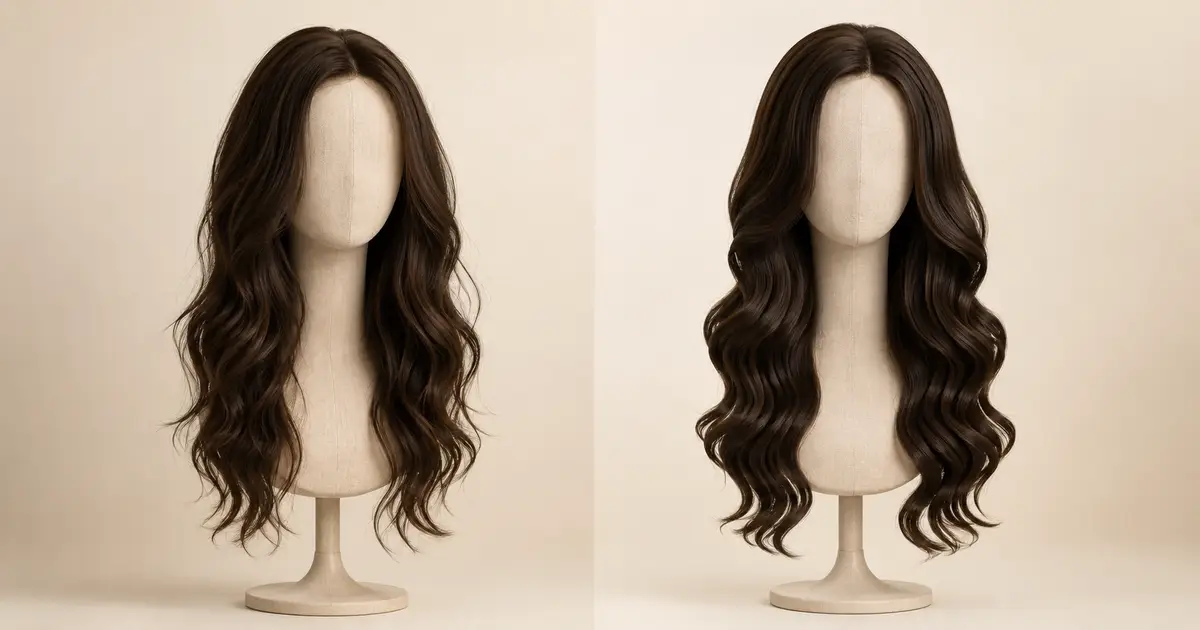
Human hair wigs look and move more like natural hair, while synthetic wigs are usually easier to care for and keep their style longer. The better choice depends on your budget, styling needs, climate, schedule, and how often you will wear the wig.
This simple guide compares the two options so shoppers, salons, and wholesale buyers can choose with confidence.
Human Hair vs Synthetic Wigs: Quick Comparison
| Feature | Human hair wig | Synthetic wig |
|---|---|---|
| Natural movement | Usually very natural | Varies by fiber and construction |
| Style memory | Needs restyling after washing | Often returns to its original style |
| Heat styling | Usually possible with proper care | Only if the fiber is marked heat-friendly |
| Daily care | More time and skill | Usually faster and easier |
| Weather | Can react to humidity | Often holds its shape better |
| Price | Usually higher | Usually lower |
| Color consistency | Natural variation may occur | Often easier to repeat by color code |
| Best for | Flexible styling and natural feel | Convenience, consistency, and planned budgets |
No wig is automatically high quality because of the material alone. Cap construction, hair density, fiber quality, lace, stitching, fit, and finishing also matter.
What Is a Human Hair Wig?
A human hair wig is made with real human hair attached to a cap. It can usually be washed, curled, straightened, and restyled much like natural hair. Always follow the supplier’s care and heat instructions.
Human hair is not one single quality level. The result can change with processing, cuticle direction, hair origin, coloring, length, density, and construction. Ask for exact specifications instead of relying only on words such as “premium” or “Remy.”
What Is a Synthetic Wig?
A synthetic wig is made with man-made fibers shaped to look like hair. Modern fibers can create straight, wavy, curly, braided, and textured styles. Many synthetic wigs are designed to keep their shape after washing.
Some synthetic fibers allow controlled heat styling, while others can be damaged by heat. Check the safe temperature before using a hot tool. Never guess based on appearance.
Which One Looks More Natural?
Human hair often has more natural movement and light reflection. However, a well-made synthetic wig can also look convincing. The hairline, parting space, lace color, density, cap fit, fiber shine, and styling have a large effect.
A poor human hair wig may look less natural than a carefully designed synthetic wig. Compare the complete product, not only the fiber label.
Which Wig Is Easier to Care For?
Synthetic wigs are usually easier for beginners. They often keep their curl or wave pattern and may need less daily styling. Human hair wigs need washing, conditioning, drying, and restyling more like natural hair.
- Choose synthetic if you want a ready-to-wear style with simple care.
- Choose human hair if you enjoy restyling and can spend more time on maintenance.
- For either type, use products recommended for the material.
Can You Use Heat?
Human hair normally allows more heat styling, but too much heat can still cause dryness and breakage. Use a moderate temperature and heat protection.
For synthetic wigs, look for a written heat limit. “Heat-friendly” does not mean unlimited heat. Test a hidden section first and keep the tool moving.
Which One Lasts Longer?
Lifespan depends on quality, wear frequency, friction, heat, washing, storage, and care. A carefully maintained human hair wig may last longer, but material alone does not guarantee durability.
Ask how the wig should be washed, dried, detangled, and stored. A clear care guide helps protect either type.
Which One Is Better in Hot or Humid Weather?
Synthetic fibers often hold a planned shape better in humidity. Human hair can react to weather like natural hair and may need restyling. Comfort also depends on cap ventilation, density, length, and fit.
For warm climates, compare cap construction and weight as carefully as the hair material.
How Do Prices Compare?
Human hair wigs are usually more expensive because the raw material and processing cost more. Synthetic wigs can offer consistent colors and styles at a lower price.
Do not compare price until the length, density, cap, lace, fiber or hair grade, packaging, and order quantity are the same. A lower price may simply mean a different specification.
Best Choice for Different Buyers
Choose human hair if you:
- Want the most flexible restyling options
- Prefer natural movement and feel
- Can spend more time on care
- Have a higher budget
Choose synthetic hair if you:
- Want a style that is easy to maintain
- Need consistent colors or repeat orders
- Prefer a more controlled price
- Want a lightweight everyday option
What Wholesale Buyers Should Check
For wholesale orders, test samples from the same specification you plan to buy. Record:
- Hair or fiber type
- Length and density
- Cap size and construction
- Lace type and color
- Heat limit and care method
- Shedding, tangling, and odor
- Color consistency between units
- Packaging, MOQ, lead time, and defect policy
Use the same test for every supplier. Our high-quality wig checklist explains seven easy product checks, while the wig manufacturer checklist covers samples, MOQ, quality control, and written order terms.
Frequently Asked Questions
Are synthetic wigs always shiny?
No. Shine varies by fiber, color, lighting, and finishing. Check the wig in daylight and avoid judging from one edited photograph.
Can synthetic wigs be washed?
Most can be washed with suitable products and cool water, but follow the specific care instructions for the fiber and style.
Can human hair wigs be colored?
Some can, but previous processing and hair condition affect the result. Ask the supplier and test a hidden area or sample first.
Which type is better for beginners?
Synthetic wigs are often easier because they keep their style. A simple human hair wig can also work if the wearer is comfortable with regular styling.
Final Answer
Choose human hair for flexible styling and a natural feel. Choose synthetic hair for easy care, repeatable styles, and a lower planned budget. In both cases, inspect the cap, hairline, density, material, stitching, fit, and care instructions before buying.
Explore lace wig options and synthetic hair wigs, or contact Velora Wig with your required style, quantity, destination, and target price.